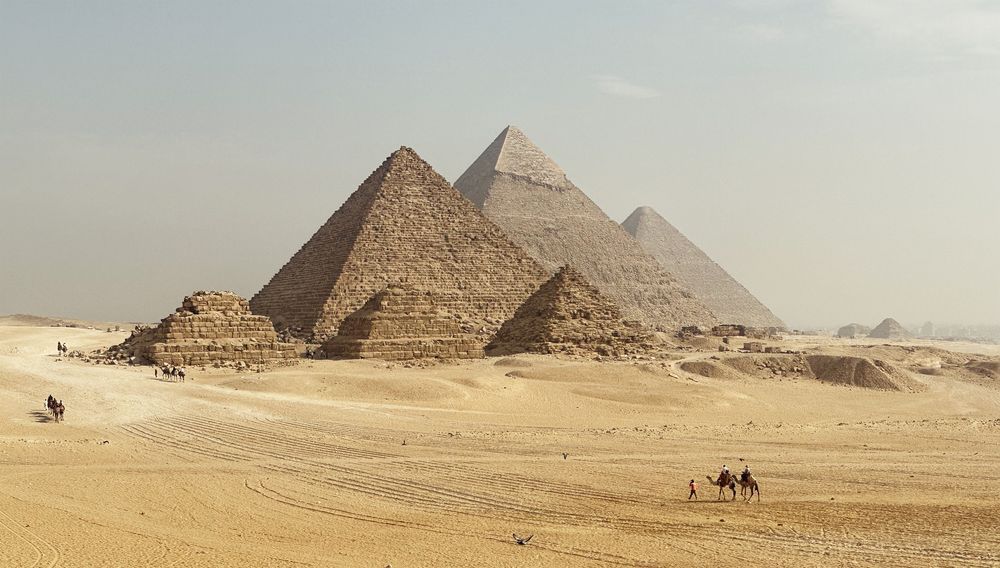
The Pyramids of Giza are among the most extraordinary achievements of the ancient world, built during Egypt’s Fourth Dynasty (circa 2600–2500 BCE). These massive structures were designed as tombs for the pharaohs, intended to secure their journey into the afterlife. The belief in an eternal existence after death was central to Egyptian civilization, and the pyramids served as both grand monuments and complex spiritual machines, aligning with celestial bodies to ensure the deceased ruler’s ascension to the gods.
The construction of these pyramids remains a subject of scholarly debate, but it is widely believed that skilled laborers—not slaves—worked in organized teams, living in nearby workers' villages. They used sleds, ramps, and advanced engineering techniques to transport and position the massive stones. The pyramids also aligned precisely with cardinal points and celestial markers, reflecting the Egyptians’ sophisticated understanding of astronomy and mathematics.
Over millennia, the pyramids have withstood earthquakes, looters, and the relentless passage of time. Though their original outer layers have mostly eroded, their core structures remain, a symbol of human ingenuity and the enduring legacy of one of history’s greatest civilizations.