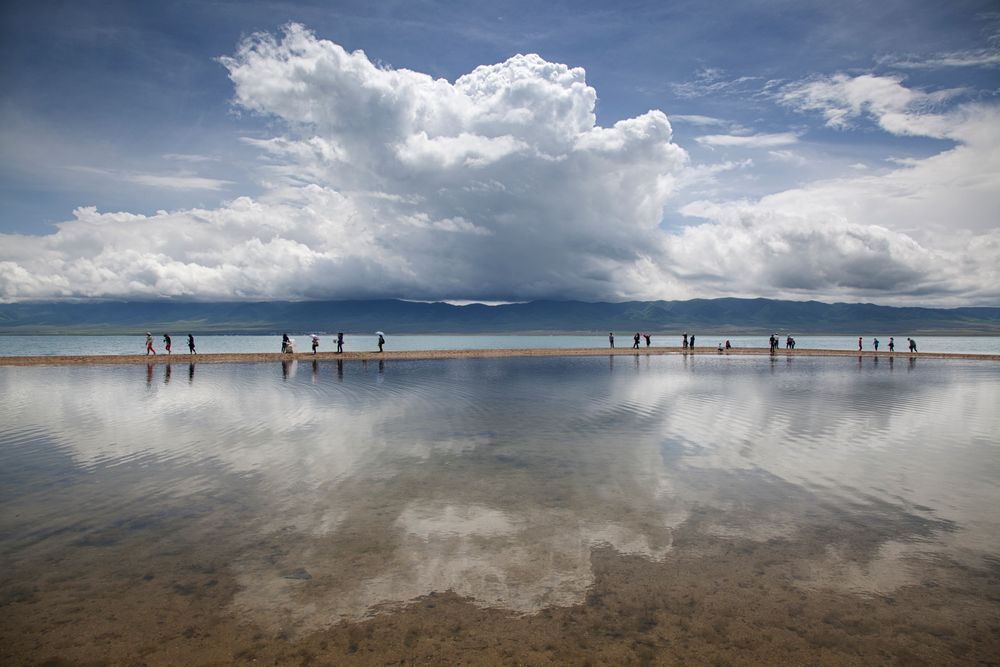
Chaka Salt Lake, nestled in Qinghai Province, has played a significant role in China's history for over 3,000 years. The lake was a crucial source of salt during the Tang and Han dynasties, supplying caravans traveling along the Silk Road. Nomadic tribes, merchants, and imperial envoys depended on its vast salt reserves, which were considered as valuable as gold in ancient trade networks.
During the Ming and Qing dynasties, the lake was heavily monitored by the imperial government, ensuring a steady supply of salt for taxation and trade. Local Tibetan and Mongolian communities also relied on the lake, integrating it into their economy and spiritual practices. The region’s salt extraction methods evolved over centuries, from manual harvesting to more structured operations under different Chinese dynasties.
In modern times, Chaka Salt Lake has transformed into a major tourist attraction, famous for its breathtaking mirror-like reflections that blur the boundary between sky and earth. While its salt production continues, the lake now serves as a cultural landmark, preserving the legacy of ancient trade while showcasing the natural beauty of China's western landscapes.