Once a strategic stronghold of the Byzantine Empire, Gjirokastër flourished under Ottoman rule, leaving behind a legacy of elegant stone mansions, intricate bazaars, and a formidable hilltop fortress that still dominates the skyline.
Albania’s history is a tapestry woven with ancient civilizations, conquests, and resilience. From its roots in the Illyrian tribes, who thrived in the Balkan region for centuries, to its modern independence, the nation has been shaped by diverse influences.
During antiquity, the Illyrians engaged in trade and warfare with the Greeks and later came under Roman rule in 168 BCE. The region flourished under Roman and later Byzantine governance, with cities like Dyrrachium (modern-day Durrës) serving as key economic and military hubs. In the Middle Ages, Albania fell under Bulgarian and Serbian control before being absorbed into the powerful Ottoman Empire in the 15th century.
The 20th century saw Albania grappling with monarchy, occupation during World War II, and then a repressive communist regime under Enver Hoxha from 1946 to 1985. Hoxha’s rule isolated Albania from the world, transforming it into one of the most secretive and militarized states in Europe, with thousands of bunkers dotting the landscape.
Following the fall of communism in 1991, Albania embarked on a challenging transition toward democracy and economic reform. Today, it is a vibrant country that embraces its rich heritage while moving toward European integration.
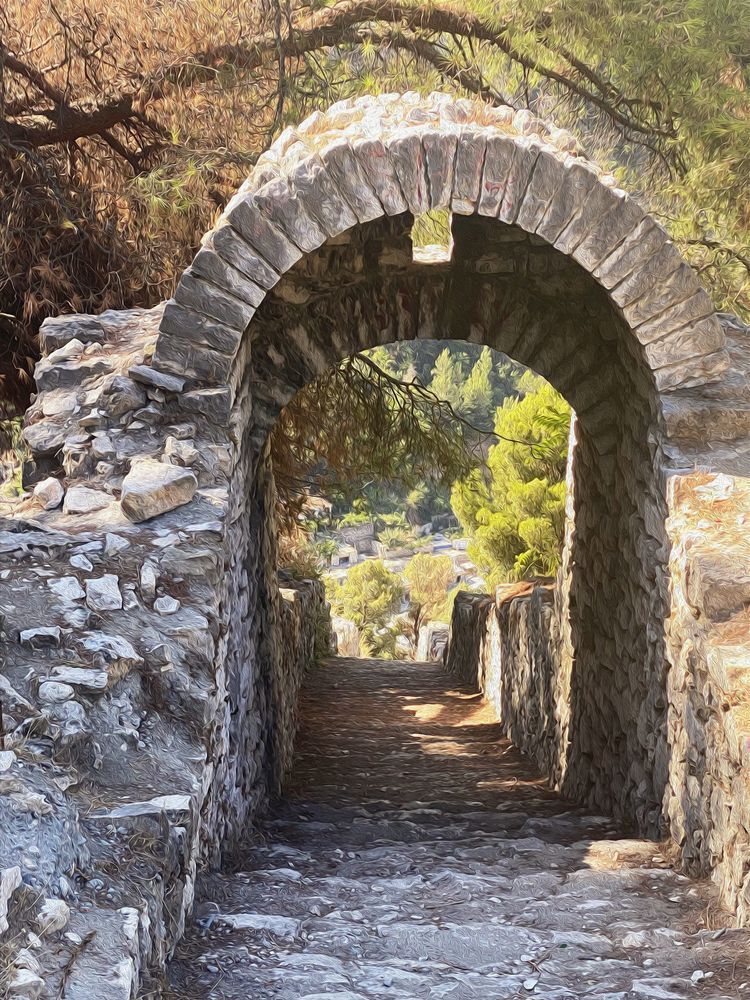
Gjirokastër, where this image is taken, is a microcosm of Albania’s history—its Ottoman-era homes, imposing fortress, and historic streets tell the story of a nation that has endured, resisted, and ultimately thrived through the centuries.