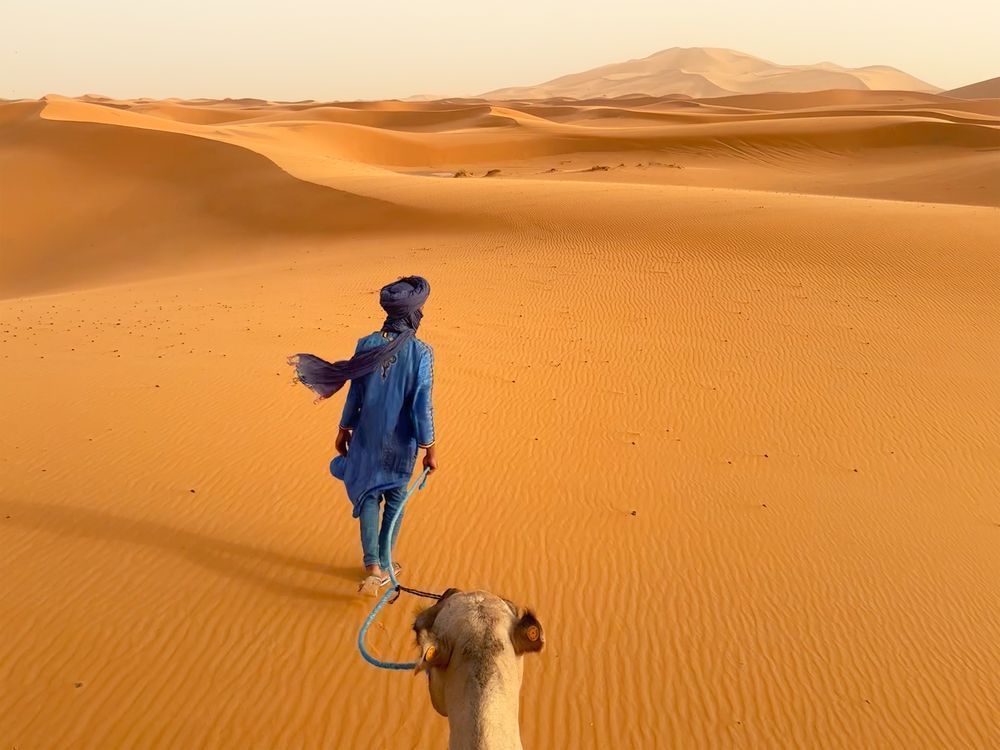
For millennia, the Sahara was a vital artery of commerce, with Berber and Tuareg traders guiding caravans laden with gold, salt, and spices across vast distances. These routes connected the Mediterranean with sub-Saharan Africa, fueling the rise of great civilizations such as the Mali Empire and the legendary city of Timbuktu. The Berber people, indigenous to North Africa, have thrived in this unforgiving landscape for thousands of years, their knowledge of the dunes and hidden oases enabling them to endure where few others could.
During the Islamic Golden Age, the Sahara became a crossroads of culture, where scholars, merchants, and travelers exchanged knowledge, shaping the intellectual and economic landscapes of Africa and the Middle East. Even today, the tradition of desert treks continues, offering modern explorers a glimpse into a way of life that has remained remarkably resilient, standing as a testament to the enduring spirit of the Sahara and its people.