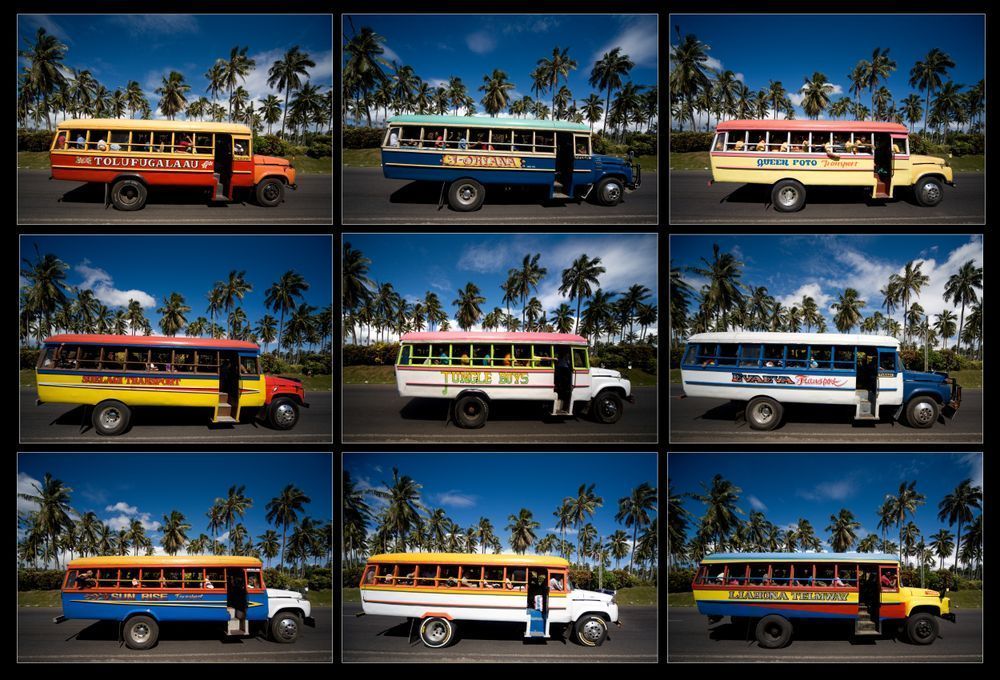
More than just transportation, aiga buses represent a way of life—where schedules are flexible, music plays loud, and every ride is a social experience.
The history of Samoa’s buses is intertwined with the nation’s colonial past and its resilient local ingenuity. Public transport in Samoa began to evolve in the mid-20th century, when repurposed truck chassis were fitted with wooden bus bodies, hand-built by local craftsmen. The aiga buses—named after the Samoan word for "family"—soon became an essential part of daily life, providing an affordable and communal means of travel across the islands.
Samoa itself has a rich history, dating back over 3,000 years when Polynesian navigators first settled the islands. It became a key center of trade and exploration in the Pacific, later falling under German, British, and New Zealand rule before gaining independence in 1962—the first Pacific island nation to do so. Despite modernization, Samoa has held onto its traditions, and the aiga buses remain an enduring symbol of its cultural heritage. They stand as a testament to the country’s ability to blend innovation with tradition, ensuring that even as times change, the spirit of communal travel and island hospitality lives on.