Laos at River Speed: Luang Prabang and the Slow Boat North
Aug 26, 2026
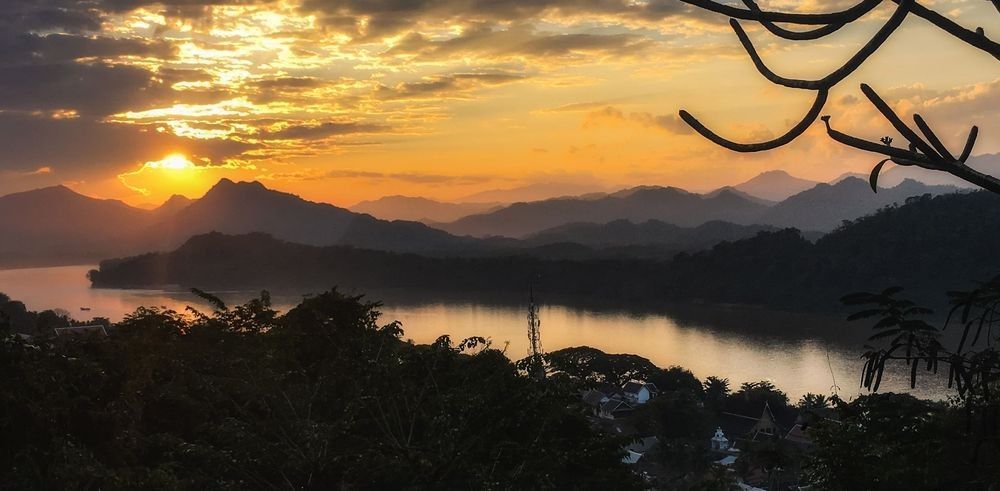
Luang Prabang is built around two rivers—the Mekong and the Nam Khan—but its real character comes from the pace. It is a UNESCO city of temples, old streets, market stalls, and long evenings by the water. Even with only a few days there, we quickly felt Luang Prabang moving at its own unhurried rhythm.
That made the next part of the trip feel fitting. We were leaving Luang Prabang by slow boat, heading north on the Mekong toward the Thai border.
North on the Mekong
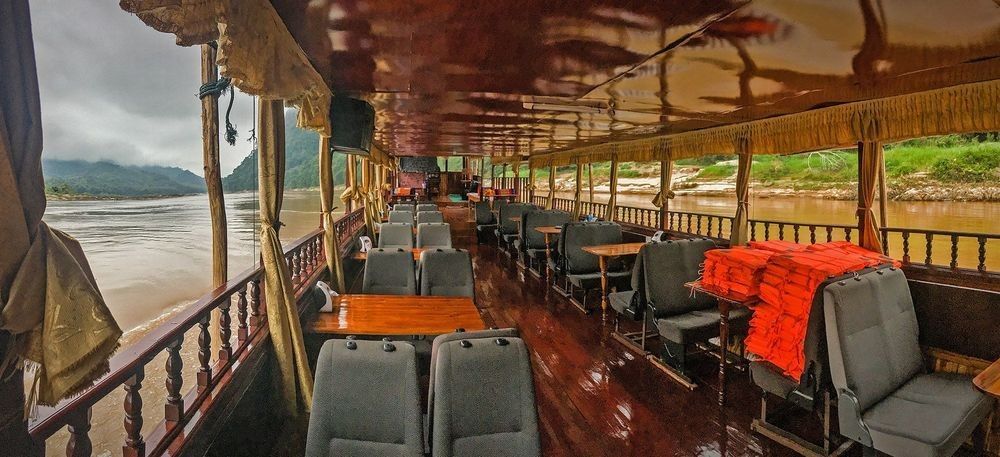
The boat could hold about 75 people. When we climbed aboard, it was just the three of us and the crew.
We had seen photos of crowded slow boats: backpacks in the aisles, travelers squeezed into every seat, everyone settling in for the same long ride. Our experience was the complete opposite. There was room to spread out, claim one of many windows, read, sleep, and watch the river slide past.
The route to Huay Xai is roughly 175 miles and takes about fifteen hours on the river, split over two days with an overnight stop in Pak Beng. It is slow in every possible sense. The boat moves slowly. The river moves slowly. There is no reason to check the time very often.
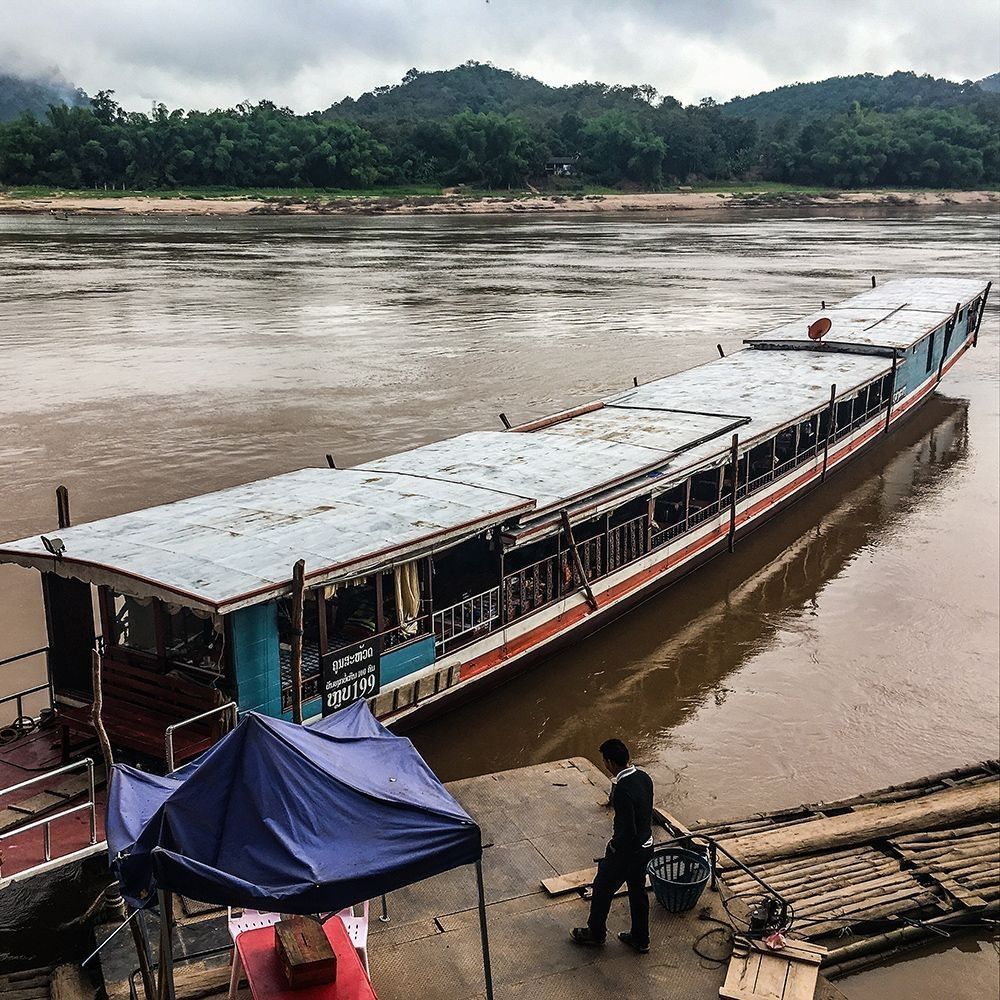
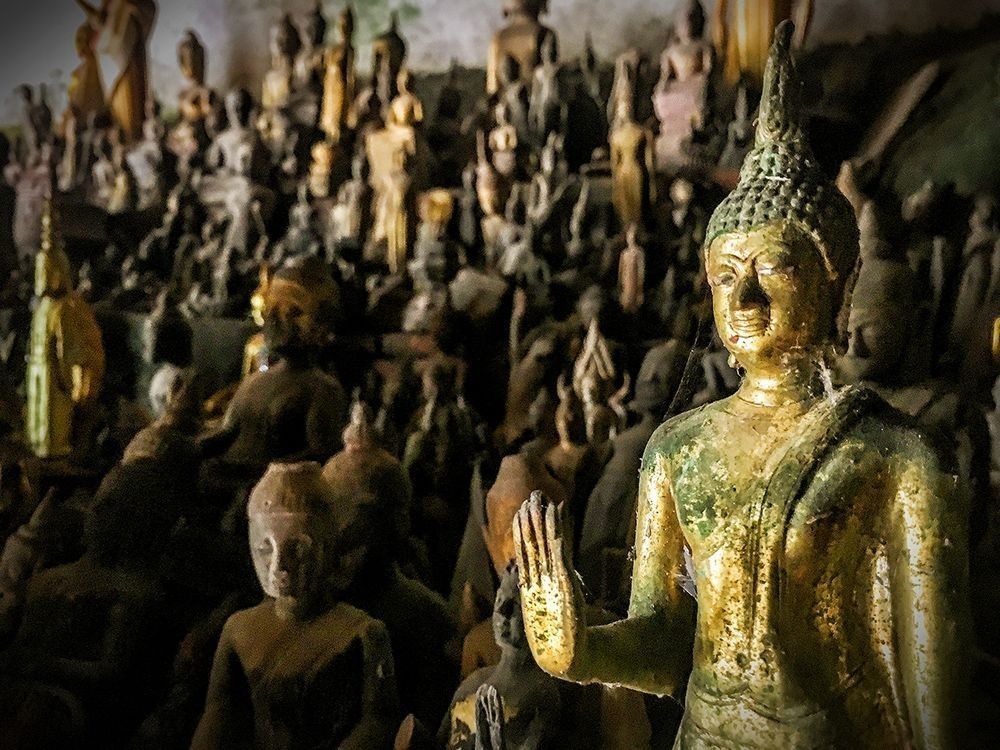
We stopped at the Pak Ou Caves, where thousands of Buddha images fill limestone recesses above the river, then made a short visit to a small riverside village. After that, we kept moving north past fishing boats, green hillsides, and long stretches of shoreline where there did not seem to be a road in sight.
Pak Beng was little more than an overnight pause: a walk through town, dinner overlooking the water, and an early night before getting back on the boat.
By the second day, the novelty had worn off in the best way. The slow boat was no longer transportation. It was simply being in the present.
The City We Left Behind
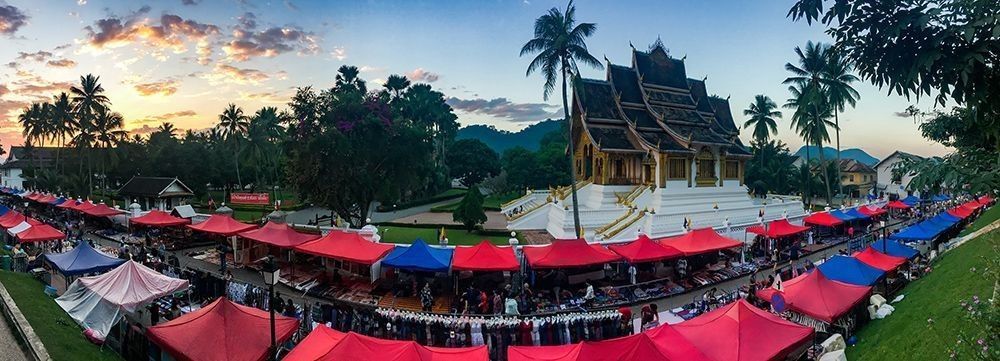
A few days earlier, we had arrived from Hanoi, found our small hotel, and spent the afternoon exploring the small central area. Luang Prabang’s center is compact, with temples and quiet side streets tucked between the main road and the river. By night, the market had taken over the main street beneath the sunset.
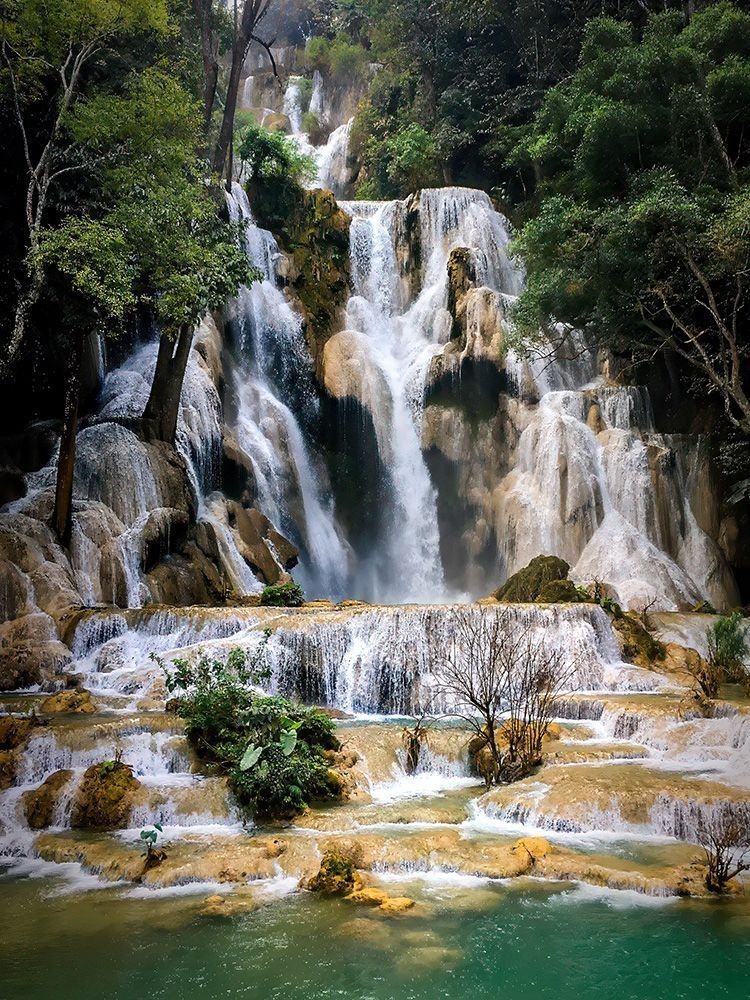
The following day, we rented scooters and rode out to Kuang Si Falls. Once we were clear of town, the traffic disappeared, and the road moved through small villages and green countryside. At the falls, water spilled through the forest into pale turquoise pools that did not look entirely real.
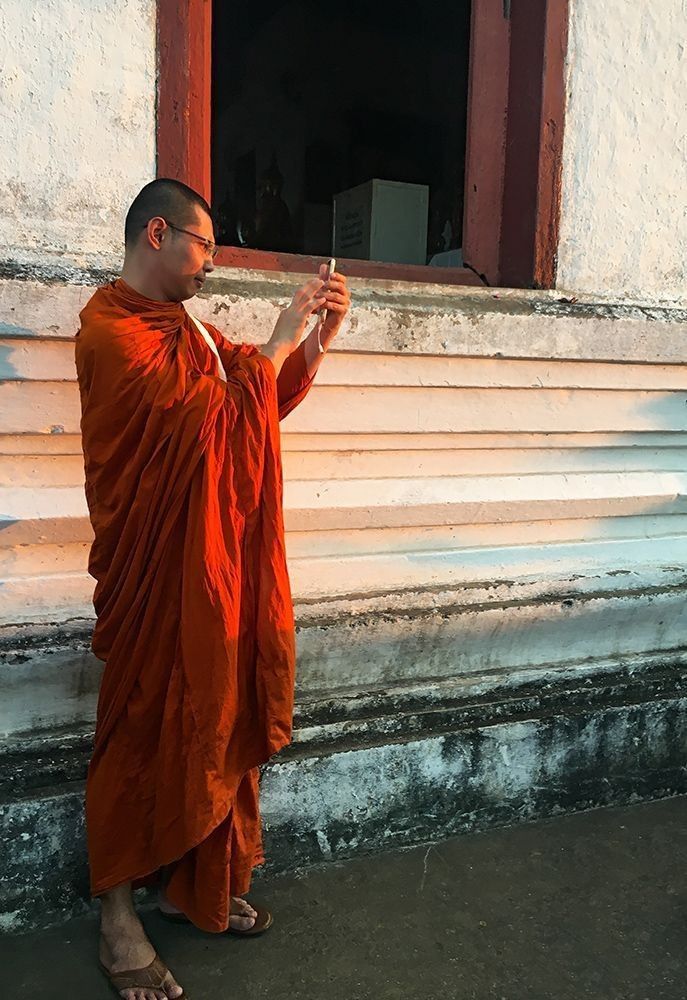
On our last evening, we climbed Mount Phou Si for sunset. The stairs were steep, the overlook was crowded, and nearly everyone—including a few monks—had a phone in the air. It was still worth it. Below us, the Mekong curved through town, temple roofs caught the last light, and the mountains faded into the distance.
The next morning, we boarded that nearly empty boat and let the river take over.
Luang Prabang and the slow boat north were very different experiences, but they shared the same thing: neither asked us to hurry. That was the part of Laos we remembered most.
Explore more travel photography and fine art prints from Gate 58.
Happy Travels!